

What Is Production?
Production is the process of transforming inputs—such as raw materials, labor, capital, and technology—into finished goods or services that satisfy human needs and wants. It is a foundational economic activity that drives business growth, employment, innovation, and overall economic development.
In simple terms, production adds value. For example, turning raw cotton into fabric or raw data into actionable insights both count as production.
Key Elements of Production
Every production system relies on a combination of essential components:
- Land – Natural resources like minerals, water, and forests
- Labor – Human effort, skills, and expertise
- Capital – Machinery, tools, buildings, and technology
- Entrepreneurship – Planning, risk-taking, and coordination
The effective combination of these elements determines productivity and output quality.
Types of Production
1. Primary Production
This involves extracting natural resources directly from the earth.
Examples include:
- Agriculture
- Fishing
- Mining
- Forestry
Primary production forms the base of all other production activities.
2. Secondary Production
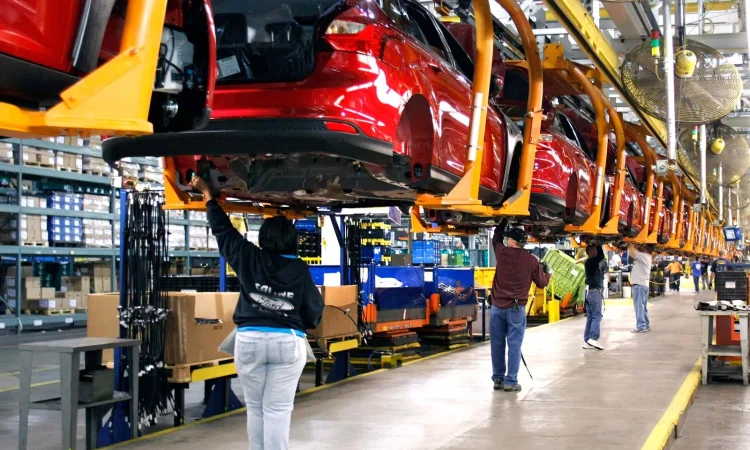
Secondary production focuses on manufacturing and processing raw materials into finished or semi-finished goods.
Examples include:
- Automobile manufacturing
- Textile production
- Food processing
This stage significantly increases the value of raw materials.
3. Tertiary Production
Also known as service production, this type supports consumers and businesses rather than creating physical goods.
Examples include:
- Transportation
- Healthcare
- Education
- Banking and insurance
4. Quaternary Production
This knowledge-based production involves intellectual services.
Examples include:
- Research and development
- IT services
- Data analysis
- Consulting
Methods of Production
Mass Production
Mass production involves producing large quantities of standardized products using assembly lines and automation.
Key features:
- High efficiency
- Lower unit costs
- Limited customization
Batch Production
Products are made in groups or batches.
Common in:
- Bakeries
- Pharmaceutical manufacturing
- Clothing production
Job Production
Each product is customized and produced individually.
Ideal for:
- Furniture making
- Construction projects
- Custom software development
Continuous Production
This method runs non-stop and is used for standardized products with constant demand.
Examples include:
- Oil refining
- Chemical production
- Electricity generation
The Production Process Explained
The production process generally follows these stages:
- Input sourcing – Acquiring raw materials and resources
- Design and planning – Determining specifications and workflow
- Transformation – Converting inputs into outputs
- Quality control – Ensuring standards are met
- Distribution – Delivering products or services to the market
Each stage must be carefully managed to minimize waste and maximize efficiency.
Importance of Production in the Economy
Production plays a crucial role in economic stability and growth.
Its major benefits include:
- Job creation
- Income generation
- Improved standard of living
- Technological advancement
- Better availability of goods and services
Efficient production systems help businesses remain competitive while meeting consumer demands.
Challenges in Modern Production
Despite advancements, production faces several challenges:
- Rising raw material costs
- Supply chain disruptions
- Environmental sustainability concerns
- Skilled labor shortages
- Rapid technological changes
Organizations must adapt by investing in automation, training, and sustainable practices.
Future Trends in Production
The future of production is shaped by innovation and responsibility.
Key trends include:
- Automation and robotics
- Artificial intelligence in production planning
- Sustainable and green manufacturing
- Smart factories and Industry 4.0
- Customization through digital manufacturing
These trends aim to increase efficiency while reducing environmental impact.
Frequently Asked Questions (FAQs)
1. What is the main goal of production?
The main goal of production is to create goods or services that satisfy consumer needs while adding value to resources.
2. How does production differ from manufacturing?
Production is a broader concept that includes services, while manufacturing specifically refers to making physical goods.
3. Why is production important for businesses?
Production enables businesses to offer products or services, generate revenue, and remain competitive in the market.
4. What factors affect production efficiency?
Efficiency is influenced by technology, labor skills, resource availability, management practices, and production methods.
5. Can production be environmentally sustainable?
Yes, sustainable production focuses on minimizing waste, conserving energy, and reducing environmental harm.
6. What is value addition in production?
Value addition refers to increasing the worth of a product through processing, design, or service enhancement.
7. How is technology changing production today?
Technology is improving speed, accuracy, customization, and decision-making through automation and data-driven systems.


